
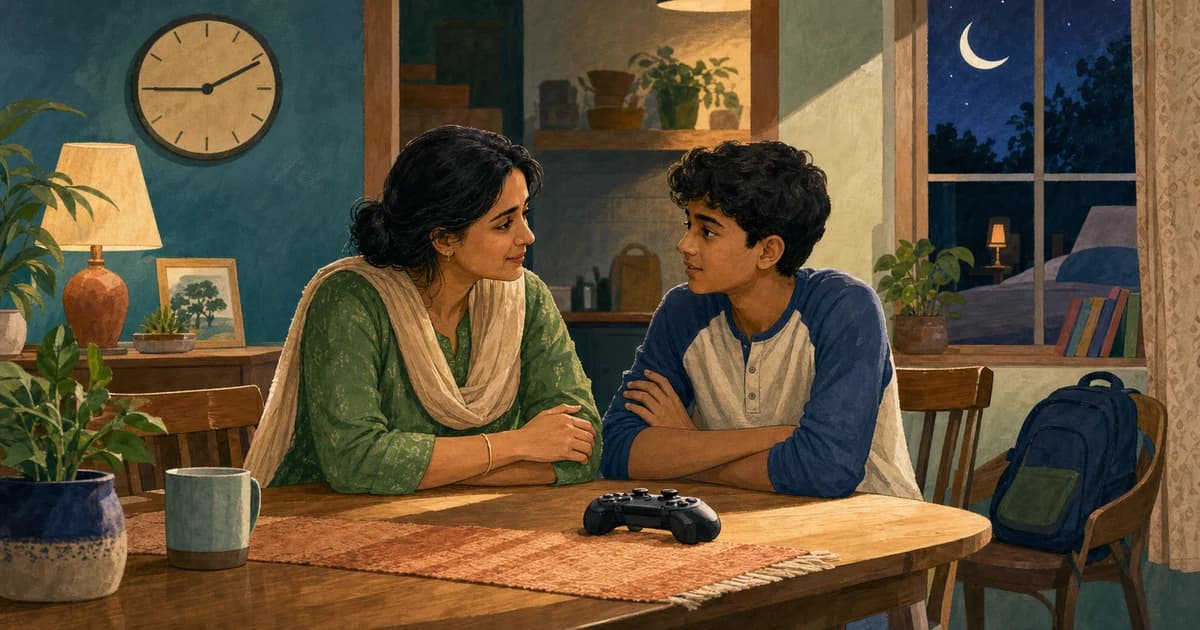
Gaming can be fun, social, creative, or absorbing. A long session, strong enthusiasm, or frustration when play ends does not by itself mean a child has an addiction. The important questions are about control, persistence, consequences, and daily functioning over time.
“Gaming addiction” is common everyday language. Gaming disorder is a clinical diagnosis. This article explains the distinction so families can respond without panic or shame. It cannot determine whether a particular child has a disorder.
What Really Is Gaming Disorder?
The World Health Organization’s ICD‑11 definition describes a pattern of impaired control over gaming, increasing priority given to gaming over other activities, and continuation or escalation despite negative consequences. The pattern must cause significant impairment in personal, family, social, educational, occupational, or another important area of functioning. It is normally evident for at least 12 months, although the duration may be shorter when symptoms are severe.
WHO also notes that gaming disorder affects only a small proportion of people who play games. High engagement and a clinical disorder are not the same.
Early Warning Signs Parents Should Watch For
Do not use a checklist to diagnose. Instead, write down patterns and consequences you can discuss with a qualified professional, such as:
Loss of control: repeated unsuccessful attempts to cut back.
Priority shift: choosing gaming over friends, hobbies, or homework.
Distress or irritability around limits that is intense, persistent, or part of a broader pattern.
Decline in school performance or sleep problems.
Secrecy about time, spending, accounts, or what happens in the game.
Continued play despite negative consequences (family conflict, health issues).
One item can have many explanations, and several items do not confirm a disorder. What matters is the pattern, its duration, the child’s developmental context, and the degree of impairment or risk.
Why Kids Can Become Overly Engaged with Games
Games can provide clear goals, immediate feedback, mastery, escape, creativity, and social connection. Commercial features such as endless play, random rewards, social pressure, or purchases may make stopping harder. A child may also be using gaming to meet a need that deserves attention, such as belonging, competence, relief from stress, or a predictable place to succeed.
Start with curiosity rather than shame: “What do you like about this game?” and “What makes it hard to stop?” are often more informative than “Why are you addicted?”
Steps Families Can Try
These are general starting points, not a treatment protocol. Adapt them to the child, family, device, game, and any advice from a treating professional.
1. Prioritize quality and context over strict minute counting
Look at what the child is doing, who they are with, why they are playing, and what the activity replaces, not only the clock. The American Academy of Pediatrics’ current media guidance similarly emphasizes quality, context, and conversation alongside time.
2. Use parental controls as a tool, not a substitute for conversation
Device and platform controls can limit hours, purchases, communication, or content. Explain the rule and revisit it together where age-appropriate; a control is a guardrail, not a substitute for understanding the child’s experience.
3. Build predictable routines and screen‑free anchors
Choose a few protected anchors such as sleep, school, meals, movement, and in-person connection. Define the stopping point before play begins: after this match, at the end of this level, or when the visible timer finishes.
4. Teach emotional skills and offer alternatives
Offer realistic alternatives that meet a similar need. A child seeking competition may prefer a ball game; a child seeking social contact may need time with a friend; a child seeking quiet may choose drawing or music. Do not remove a major coping activity without noticing what function it served.
5. Co‑play and model healthy habits
Play or watch sometimes. It can reveal the game’s social dynamics, stopping points, spending prompts, and what your child values. Adults can also model the device boundaries they ask children to follow.
A Practical Family Conversation
Use these prompts as a starting point:
Map the week: When does gaming happen, and what tends to happen before and after?
Protect priorities: Which sleep, school, meal, movement, and relationship anchors need to stay intact?
Agree on stopping cues: Which natural endpoint, device control, or visual countdown will be used?
Understand the benefit: What does the game provide, friends, mastery, escape, competition, creativity, or routine?
Review without accusation: What worked, what felt hard, and were there any upsetting social or spending experiences?
Escalate support when needed: If safety or functioning is deteriorating, involve a qualified professional instead of trying increasingly severe rules alone.
If ending a session is the main friction point, Nurturevia’s Ending Screen Time guide offers a simple transition plan. It is not a gaming-disorder intervention.
When to Seek Professional Help
Seek professional support when gaming is linked with clear impairment in sleep, education, relationships, health, or safety; when attempts to change the pattern repeatedly fail; or when the child or family is significantly distressed. A paediatrician or qualified mental-health professional can assess the whole picture, including other difficulties that may be contributing.
If there is immediate danger, self-harm risk, or a medical emergency, do not wait for a routine appointment or use a website tool. Contact local emergency services or an appropriate crisis service. Nurturevia’s urgent-help page explains this boundary.
Final Notes
When reviewing gaming, focus on changes in sleep, school, relationships, health, and safety. Use controls alongside clear routines and conversation, and leave diagnosis to a qualified professional.
This article provides general education. It cannot diagnose gaming disorder, recommend treatment, or determine an appropriate limit for an individual child.